


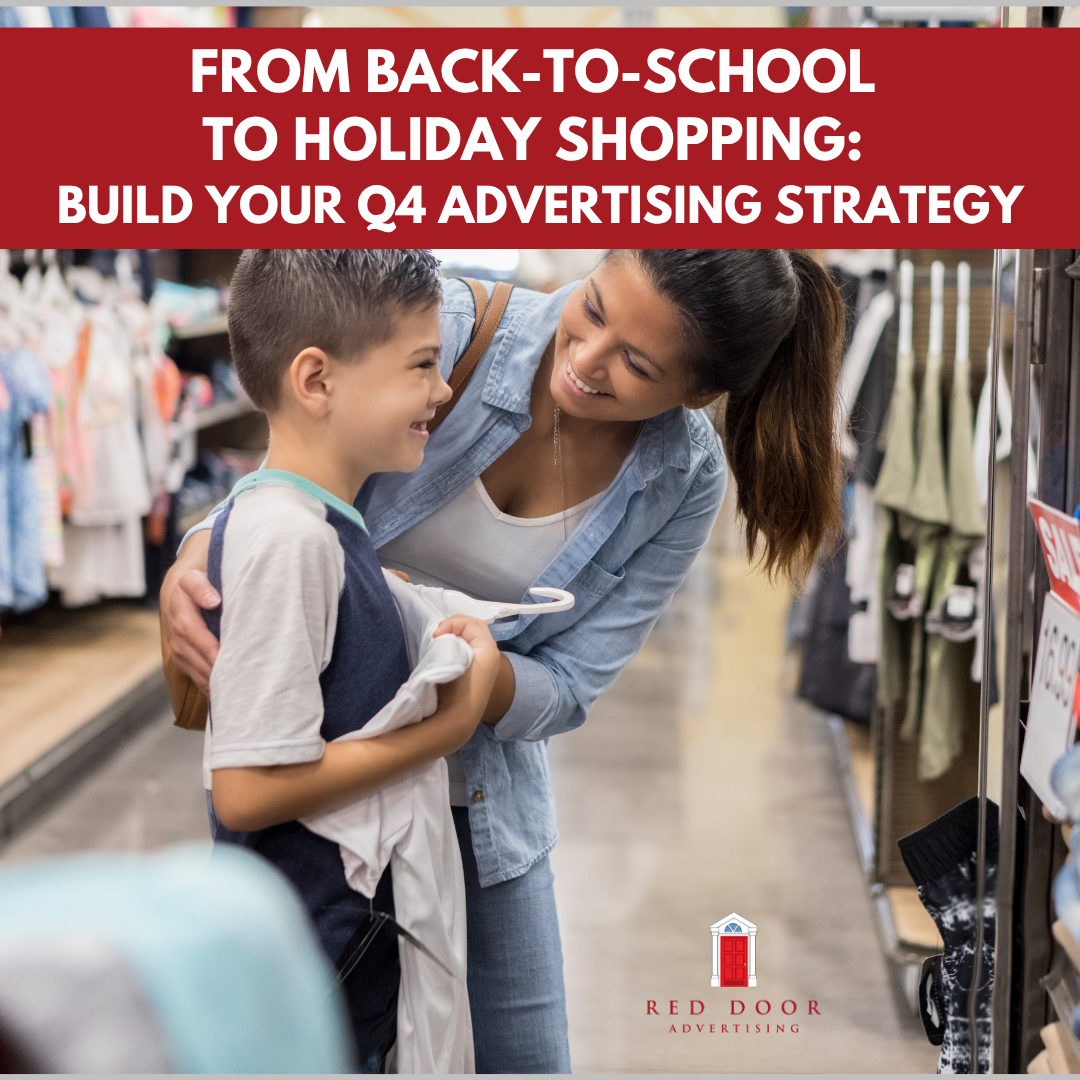
29 Aug From Back-to-School to Holiday Shopping: Build Your Q4 Advertising Strategy
The last quarter of the year is one of the busiest, most competitive stretches for any business. Consumers are gearing up for holidays, big purchases, events, travel, and year end deals, while businesses fight for attention across search, social media, email, streaming platforms, websites, and traditional advertising.
If you wait until November to think about your holiday advertising, you’re already behind. The strongest Q4 campaigns start well before the holiday rush hits its peak. Using back-to-school season as your launch point lets you build a strategy that creates awareness, builds relationships, and moves customers toward a purchase across the whole quarter.
Here’s how to get started.
Start With Your Q4 Goals
Before you choose platforms, create ads, or set a budget, decide what you want your advertising to accomplish.
Your Q4 goals might include:
- Increasing holiday sales
- Generating new leads
- Driving traffic to your website
- Promoting specific products or services
- Increasing brand awareness
- Reaching new customers
- Encouraging repeat purchases
- Building your email or customer database
- Moving excess inventory
- Promoting gift cards or seasonal services
Your goals should shape everything, from messaging and audience targeting to budget and how you measure success.
Instead of saying, “We want more sales,” set a measurable objective. A specific goal gives your team something to work toward and makes it easier to tell what’s working. If brand awareness is one of your goals this quarter, our overview of brand building is a useful starting point for thinking through what that means for your business.
Use Back-to-School as Your Q4 Launch Point
Back-to-school marketing isn’t just for retailers selling notebooks and backpacks. The season gives businesses across many industries a chance to reconnect with customers and build momentum before the holiday rush.
Think about what your audience needs in September. Could your business offer a seasonal service, promotion, piece of educational content, or event?
Back-to-school campaigns also reveal which messages and audiences generate the most engagement, insight you can carry straight into your fall and holiday campaigns. For a sense of how a smaller seasonal window can still drive real engagement, take a look at our 8 Valentine’s Day Marketing Ideas for Your Business, since the same thinking applies here.
The goal here isn’t to start selling holiday products in September. It’s to start building attention and gathering data.
Map Your Customer’s Journey
Few consumers see one ad and buy on the spot. They might spot your business on social media, visit your site, read a review, search for your products, compare you to competitors, and come back later to decide.
Your Q4 strategy should account for that path. Try dividing your campaigns into three stages:
- Awareness: Introduce your business, products, or services to potential customers.
- Consideration: Give interested consumers reasons to choose you. Testimonials, educational content, product demos, reviews, and social proof all work well here. Our piece on The Power of Bandwagon Advertising: 5 Marketing Strategies digs into how showing that others already trust you can move people through this stage.
- Conversion: Give customers who are ready to act a compelling offer, a clear call to action, an easy way to buy, or a limited-time promotion.
A coordinated journey like this tends to outperform a string of disconnected ads.
Build a Seasonal Content Calendar
Q4 moves fast. A content and advertising calendar keeps your team from scrambling to figure out what to promote next.
Map out important dates and promotional opportunities ahead of time, including:
- Back-to-school season
- Labor Day
- Fall events
- Halloween
- Thanksgiving
- Black Friday
- Small Business Saturday
- Cyber Monday
- Christmas and other holiday celebrations
- New Year’s
- End-of-year sales or promotions
Not every business needs to advertise around every holiday. Pick the dates that make sense for your audience and brand.
Planning ahead also gives your creative team time to develop strong visuals, videos, landing pages, emails, and ad copy, instead of rushing everything out at the last minute.
Determine Where Your Audience Is
More channels don’t automatically mean better results. Your strategy should focus on the places where your customers spend time and make buying decisions.
Depending on your audience and goals, your Q4 mix might include:
- Google and search advertising
- Social media advertising
- Email marketing
- Display advertising
- Video and streaming ads
- Retargeting
- Direct mail
- Local advertising
- Influencer or creator partnerships
- Connected TV
- Traditional media
Think about how these channels can work together rather than treating each one as its own campaign.
For example, a customer might discover your brand on social media, search for your company on Google, visit your website, and later see a retargeting ad. Each touchpoint plays a part in the final conversion.
Prepare Your Creative Early
Holiday advertising is competitive. Businesses that wait until the last-minute end up competing for limited consumer attention while rushing to build campaigns.
Develop your creative assets early and build variations you can adapt throughout the quarter.
Prepare different versions of:
- Headlines
- Images
- Videos
- Calls to action
- Promotional offers
- Landing pages
- Social media graphics
- Email campaigns
A flexible creative library lets your team respond quickly when a message or offer starts performing well. Need a spark of inspiration before you start? Our roundup of 12 Top TED Talks on Marketing and How They Can Help Your Business is a good place to look.
Set Your Budget Strategically
Your Q4 budget should reflect your goals, audience, sales cycle, and past performance.
Don’t spend the same amount every week by default. Put more budget behind the periods when customers are most likely to act.
That said, avoid pouring your entire budget into the final weeks of the year. Building awareness and consideration before the holiday rush gives your business a stronger foundation once competition heats up.
Review previous campaign data whenever you can. Which channels generated leads or sales? Which audiences responded? Which creative performed best?
Past performance helps you make smarter calls about where to put your Q4 dollars.
Measure and Adjust as You Go
One of the biggest advantages of digital advertising is the ability to track performance and adjust as you go.
Track metrics tied to your goals: website traffic, leads, conversions, sales, cost per acquisition, return on ad spend, and engagement.
Don’t be afraid to change course. If one campaign is outperforming another, shift budget toward it. If a message isn’t landing with your audience, test something new.
Q4 should be a strategy, not a set-it-and-forget-it campaign.
Don’t Wait Until the Holidays
The holiday season may be the biggest opportunity of Q4, but your advertising strategy shouldn’t start there.
Starting with back-to-school season lets your business build awareness, test messaging, learn about your audience, and build momentum before competition reaches its peak.
The best Q4 advertising strategy is one that starts early, stays flexible, and keeps your customer at the center.
If you’re looking ahead to Q4, now is the time to review your goals, evaluate past campaigns, plan your seasonal calendar, and figure out where your advertising dollars can make the biggest impact. With the right strategy in place, you won’t just be reacting to the holiday rush. You’ll be ready to make the most of it.
For more on how to help your business succeed in today’s advertising and branding landscape, contact us at randi@reddooradvertising.com or brendan@reddooradvertising.com, or visit reddooradvertising.com.